Elmhurst Epoxy Flooring brings more than 20 years of slab work to epoxy flooring in Westchester, and one question keeps coming up wherever a floor meets electrical equipment. Owners ask whether a resin coat makes the spot in front of a panel safer to stand on. It does not, and we say so before any quote is written.
A floor coating is a finish. It seals the concrete, makes it easier to sweep and mop, and gives it a chosen texture, but it carries no voltage rating of any kind. Protection from energized gear comes from rated equipment and from how the work is planned, and our job is to leave a floor that lets that equipment do its work.
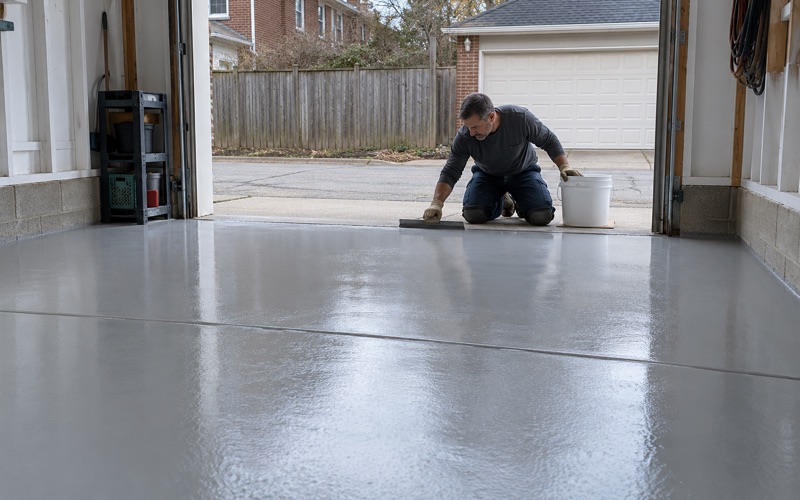
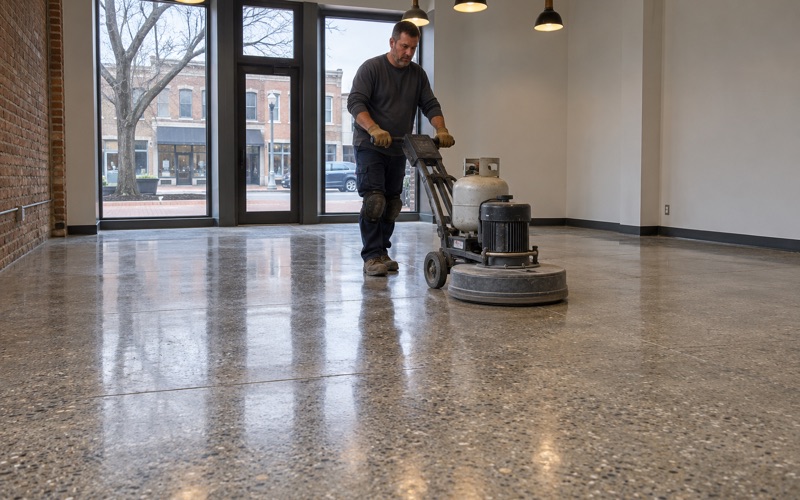
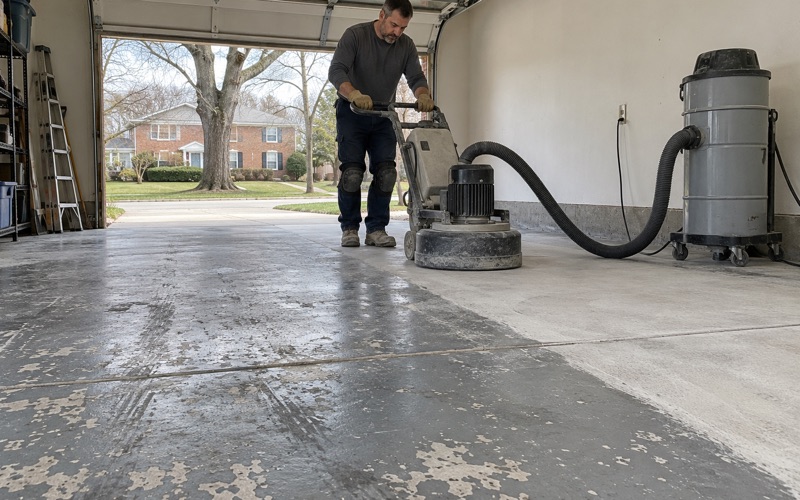
Every slab we coat is opened mechanically, with a diamond grinder or a shot blaster, and the dust is pulled into a vacuum at the machine. The written proposal names the product line, the coat count and the finished thickness, and a moisture test sits inside that scope before the price is final.
Landfill Gas Power at 31st Street and the Mats in Front of the Gear
An Electric Utility on the Old Landfill
Westchester is a village in Cook County, a western suburb of Chicago with 16,892 residents at the 2020 census, and it is mostly houses. One of its less obvious operations sits at 31st Street and I-294, on the old landfill. EPA’s ECHO database lists 31st Street Energy LLC at 11700 W 31st St under SIC 4911, Electric Services, beside the landfill record of John Sexton Sand & Gravel.
The address geocodes inside the village, and the operation generates electricity from landfill gas, the methane-rich gas that buried waste gives off as it breaks down. We have no connection to it, and we have not seen its buildings or floors. Its current operator and output were not confirmed, so we name it only for the rule it illustrates.
Wherever engines feed switchgear, that rule is the same. The floor under the gear is a surface, and the protection for people standing at the gear comes from equipment built and rated for the job.
Insulating Matting Is Rated Equipment
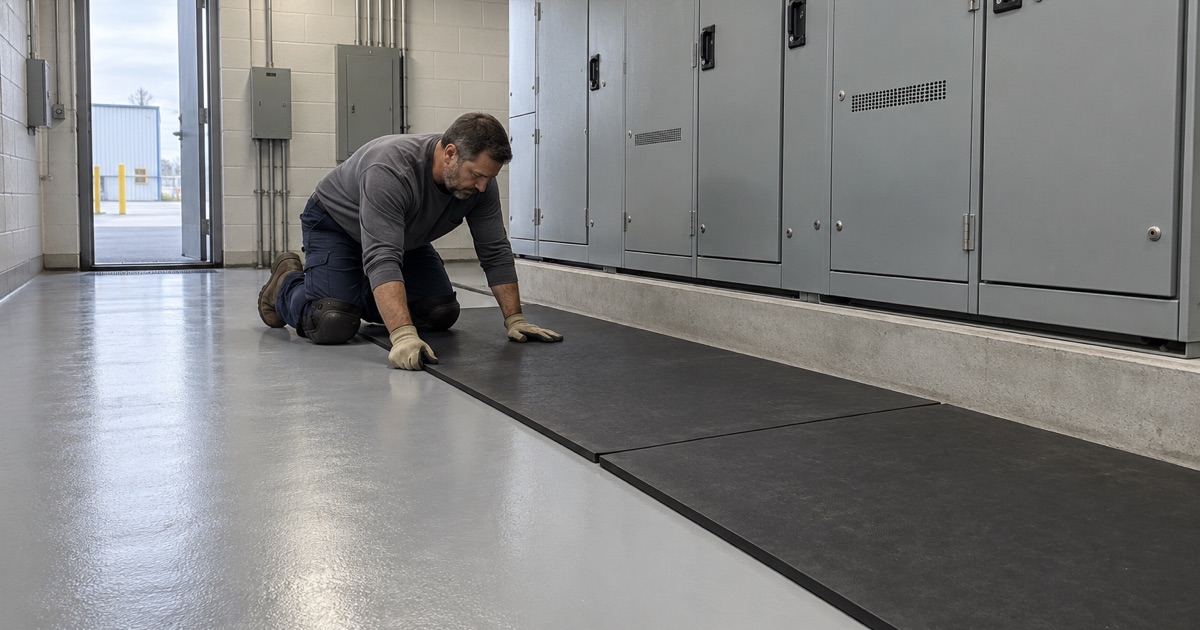
OSHA’s electrical protective equipment rule, 29 CFR 1910.137, opens its scope with rubber insulating blankets, rubber insulating matting, covers, line hose, gloves and sleeves. The note to that paragraph names ASTM D178, the standard specification for rubber insulating matting, among the consensus standards that meet its design requirements. In other words, a mat in front of switchgear is protective equipment with a design standard behind it.
A resin floor coating has none of that. It carries no voltage class, no D178 rating and no place in that rule, which says nothing about floor finishes at all. So the mats stay where they are, whatever coating goes down beneath them, and nothing we install is offered as a substitute for one.
We also do no electrical work of any kind. Questions about the gear, its labels or its clearances belong to the owner’s electrical safety program and the people qualified under it.
Looking for epoxy-flooring closer to Wood Dale? See Wood Dale Epoxy-Flooring.
Coating Under and Around Switchgear Mats: Flat, Dry, Smooth
A rubber mat is meant to lie flat on a sound surface, not ride over ridges or sit in a film of water. That makes the coating under it a real decision, even though the coating is not the protection.
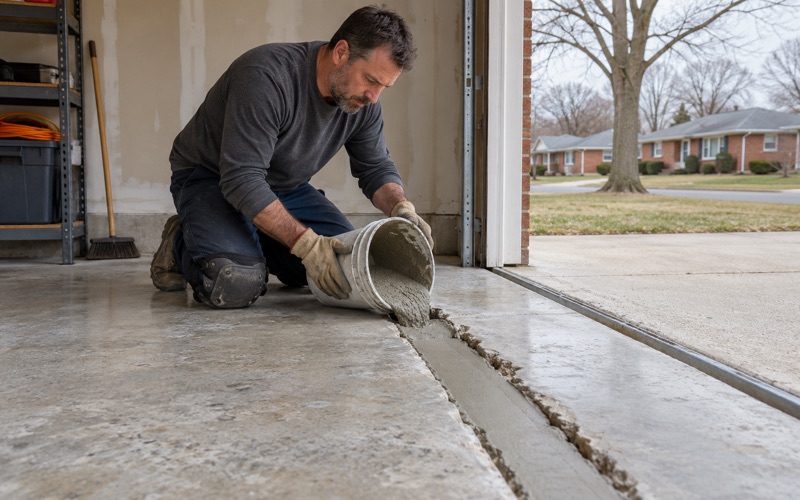
Flat starts at the slab. We grind it to the ICRI concrete surface profile the product calls for, patch and level spalls and old repairs, and build the coating to the finished thickness the proposal names, so the surface under a mat has no humps where a repair was left proud.
Texture That Will Not Chew a Mat
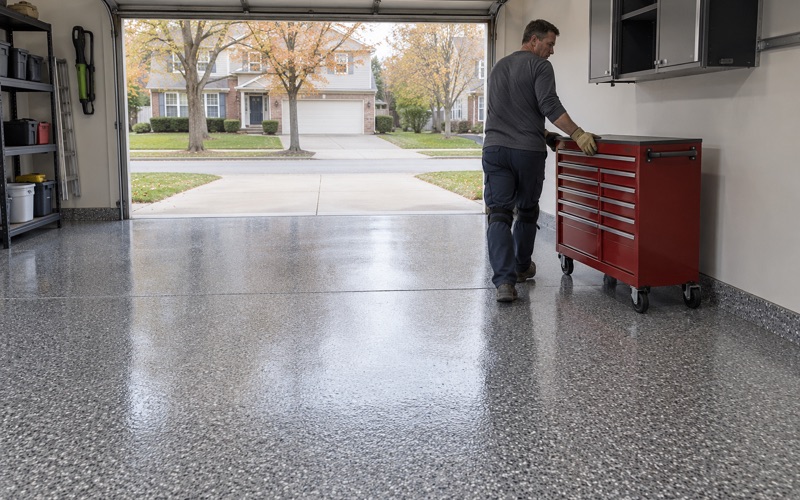
Coarse broadcast is the usual way to make a resin floor grip, and in most of a garage or shop it earns its place. Under a rubber mat it works against you: a heavy quartz aggregate broadcast can grind the underside of the mat as people shift their weight, and the valleys between grains hold water and grit beneath it. One resin manufacturer says as much about texture in general, noting that excessive texture can trap dirt and make a floor harder to clean.
So we zone the slip resistance. Where mats will lie, we specify a smooth or lightly textured topcoat, and the open walkways around them get the broadcast and topcoat combination that gives the grip the room needs. Both are written into the proposal by product and broadcast, so the texture is something you can check rather than a promise.
Clean, Dry and Fully Cured Before the Mats Go Back
A mat laid on a surface still carrying dust, oil or a waxy amine blush can slide or trap moisture underneath. We clean the coating before handover, and where an epoxy coat has bloomed we wash the blush off before the next coat or the mats go down. The mats go back only once the coating has reached the cure the product sheet calls for, judged by slab temperature and dew point spread rather than by a date on the calendar.
Water is the other enemy of a flat mat. Before we price a slab in an equipment room, we test it for moisture, usually with ASTM F2170 in-situ relative humidity probes, because a coating over a damp slab can blister, and a blister under a mat is a ridge someone stands on. Moisture is also the first exclusion we name when we explain what a coating warranty leaves out.
Doing the Work With the Gear De-Energized or Its Space Kept Clear
Floor work in a room with live electrical equipment is planned around that equipment, not the other way around. We follow the owner’s electrical safety rules, and the schedule is set with the people who control the gear before a grinder comes through the door.
When the Gear Can Be Shut Down
The simplest job is one done with the gear de-energized by the owner’s qualified staff for the duration of the work. Then the whole floor can be ground, primed and coated in sequence, the mats can be lifted and stored, and the room comes back into service once the coating has cured.
For a commercial space that cannot close during the day, we phase the floor into overnight and weekend windows. The proposal shows which area is coated in which window, so the owner can plan outages and staffing around it rather than discovering the schedule as it happens.
When the Gear Has to Stay Live
Some equipment cannot be shut down. In that case the area in front of it is left alone, and the coating stops short of the gear’s working space, which stays clear and dry while the rest of the room is done. That edge can be finished later, in a window the owner chooses, rather than worked live.
Grinding is the stage that needs the most care near equipment. Our diamond grinders and shot blasters run with vacuum dust capture at the machine, so fine concrete dust is collected rather than drifting into enclosures or being rinsed toward a floor drain. Coatings are chosen inside the Illinois VOC limits for floor and industrial coatings, limits that bind the person applying them.
The Electrical Panel in Your Westchester Basement or Garage
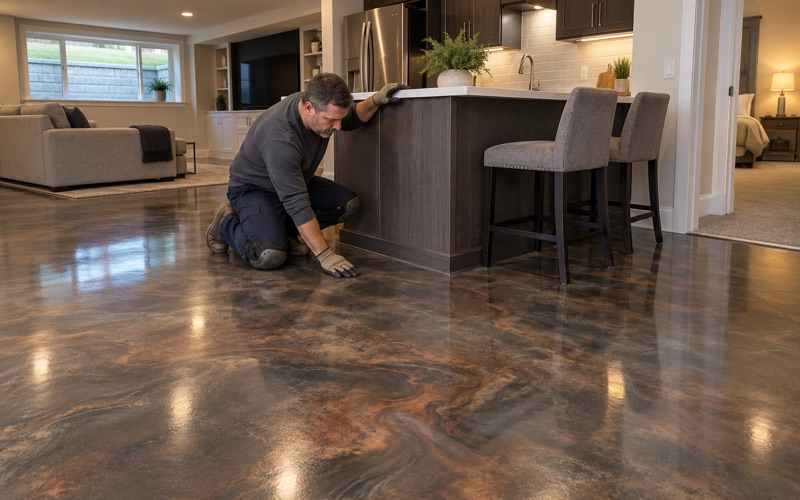
The same reasoning applies at home. A coated basement or garage floor in front of an electrical panel is easier to keep clean and dry, but it is not insulation, and a homeowner should treat the spot in front of the panel the way they did before the floor was coated.
What We Do Around the Panel
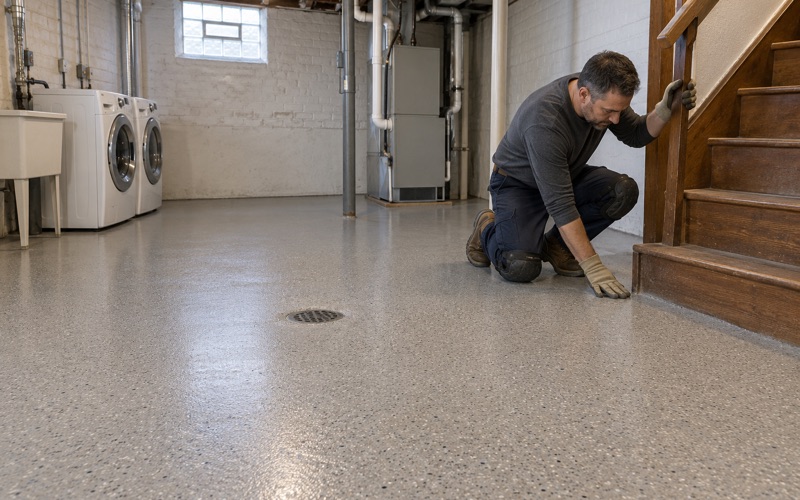
We never open, move or work inside a panel, and we keep the floor in front of it clear of stored materials while the job runs. Grinding along the wall below the panel is done with dust captured at the machine, and the panel itself is masked so dust and coating stay off the cover. Below a panel we favor a smoother finish over a coarse flake or quartz broadcast, because that is where someone stands to work.
In a basement, we read the floor for past water before anything else, because a coating does not stop seepage, a backup or a sump that cannot keep up. In many basements the panel sits near the water heater and laundry, so that corner gets the closest look.
If an outlet, conduit or panel near the floor raises a question we cannot answer, we say so and point the owner to an electrician. A floor coating does not need wiring changes, and we do not offer any.
Westchester Slabs and Who Signs Off
Nearly half of Westchester’s homes, 48.4 percent, were built in the 1950s, the decade the village grew from 4,308 to 18,092 people. A first coat here usually goes onto a slab about seventy years old, so we map cracks, spalls and any old coating first, and we say plainly when a floor needs repair or replacement before it should be coated.
Of occupied homes, 90.8 percent are owner-occupied, so the person signing our contract is usually the one who will park on the floor every winter. Garage systems are picked to stand up to the brine and rock salt tires carry in, and home jobs over the state threshold get a written contract and the Home Repair: Know Your Consumer Rights pamphlet before any grinding starts.
Building questions go to the Village of Westchester Community Development and Building Department, which reports the 2012 International Codes as its adopted code. Its permit sheets call for contractors to be registered with the village for the current year, and whether coating an existing floor needs a permit is not stated, so we ask the department before the job is scheduled.
Whether the floor sits under a commercial switchgear mat or in front of a breaker panel beside the car, the plan is the same: a properly prepared, moisture-tested slab, a coating chosen for where people stand, and protection left to the equipment rated to provide it. We put that plan in writing before the first pass of the grinder.
- 20+ Years on Concrete
- Moisture Testing in Every Scope
- Ground, Never Acid-Etched