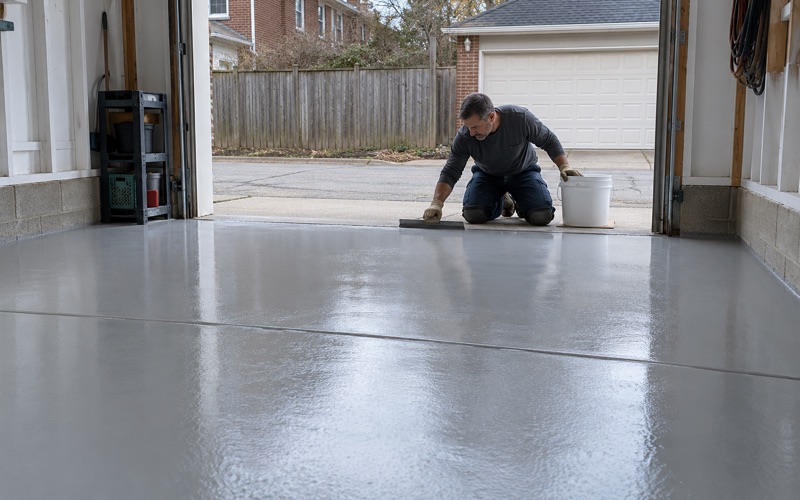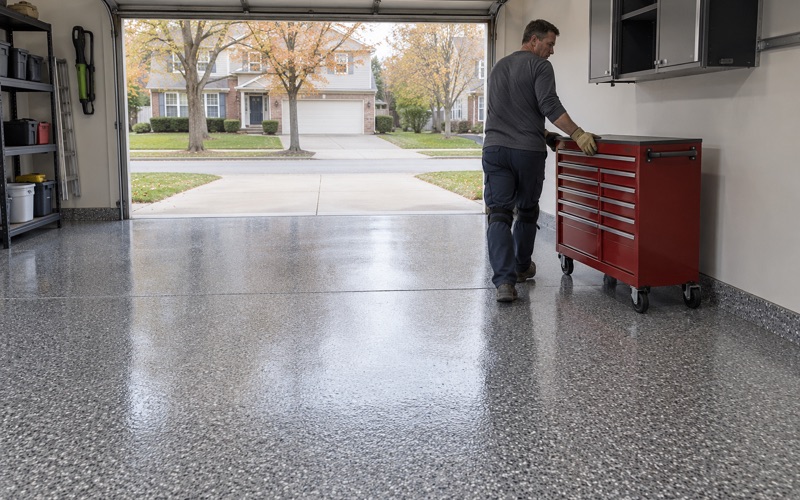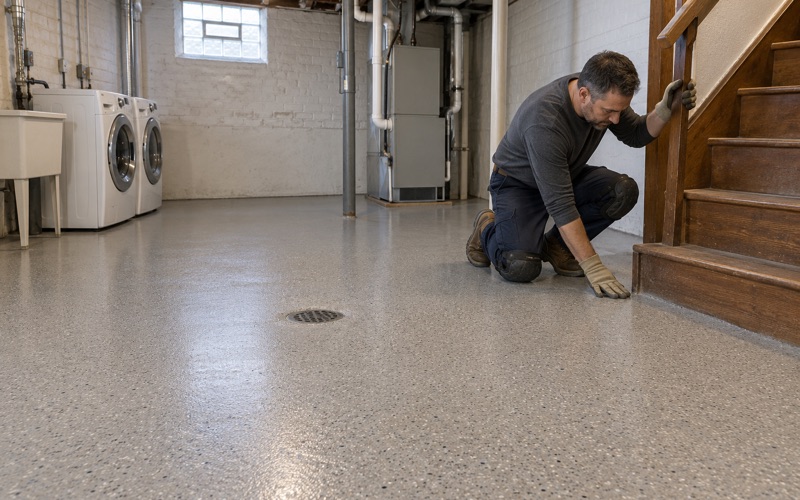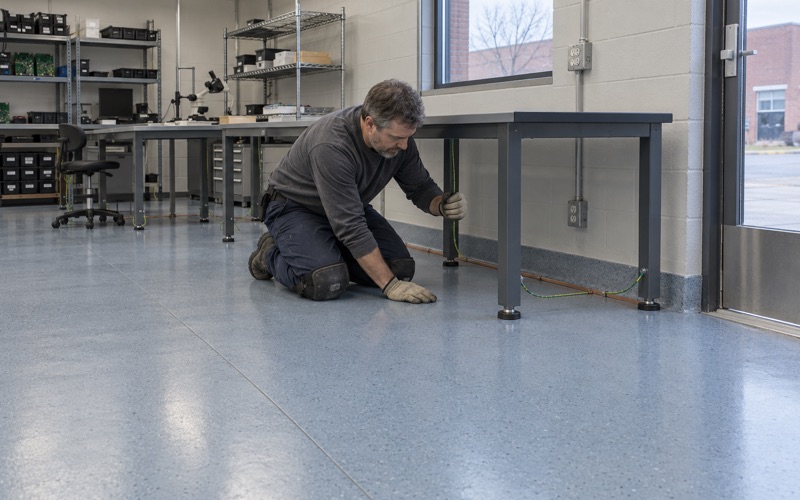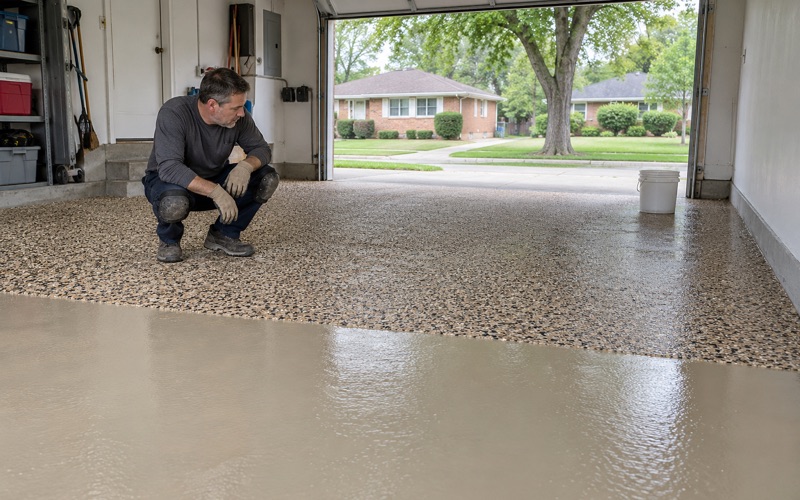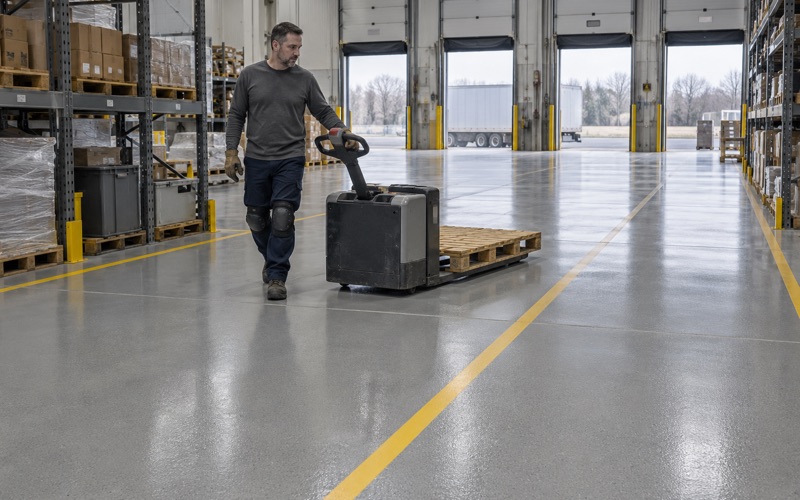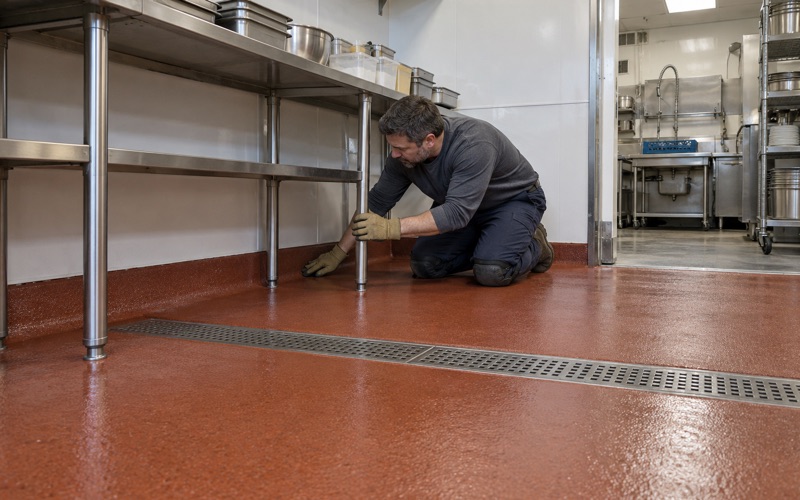
Elmhurst Epoxy Flooring brings more than 20 years of experience to epoxy flooring in Northlake, and this page is about one kind of job in particular: production floors that carry a working layout. In many plants the floor is not only a surface to protect. It is also the instruction sheet, with lines telling every operator where carts park, where held product waits and where nothing may ever sit. We build the coating and those markings as one system, so the lines are still readable after months of scrubber passes.
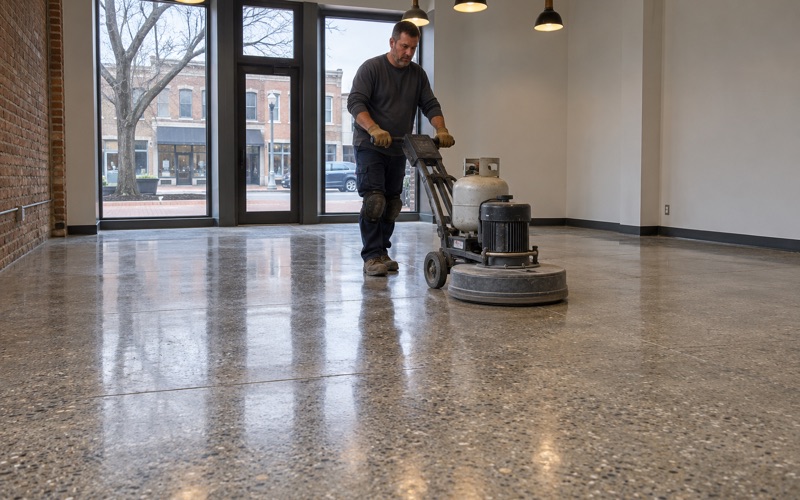
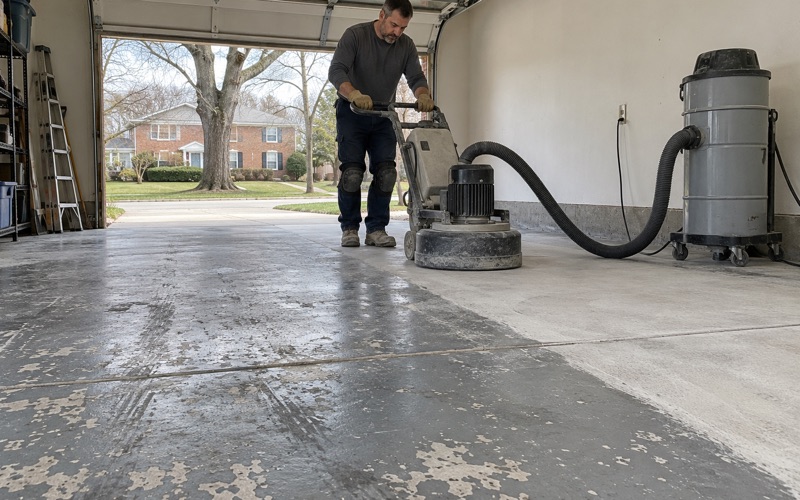
Every slab we coat is opened mechanically, with a diamond grinder or a shot blaster, so the resin grips a real profile instead of an acid-etched skin. A moisture test is written into the scope before the price is final, and the proposal names the product line, the number of coats and the finished thickness, so a plant manager can check the finished floor against the quote.
Cracks, spalls and failing old coatings are mapped first, and we say plainly when a section of slab needs repair before it should be coated. Grinding dust is pulled into a vacuum at the machine rather than washed toward a trench drain or a floor sink.
A Bag-in-Box Plant on North Avenue That Runs All Night
Northlake takes its name from two streets, North Avenue and Lake Street, which meet on the city’s west border. On North Avenue, at 200 W North Ave in Leyden Township, SIG makes bag-in-box bags and pouches at the site that came with its acquisition of Scholle IPN. SIG calls itself the only packaging system supplier covering carton, pouch and bag-in-box, and the Northlake site also houses a materials science lab and a pilot line making film of up to nine layers.
What a Job Posting Says About the Floor
SIG’s posting for a Pouch Machine Operator Level 1 in Northlake lists a $3.00-an-hour shift differential for 7:00 p.m. to 7:00 a.m., so the line keeps running after dark. The duties include inspecting bags, packing them into boxes and keeping the machine stocked with fitments. The posting also asks operators to “Keep assigned area clean and properly 5S’d according to established Lean and housekeeping expectations.”
We have not worked in that building and have not seen its floors. The posting is useful anyway, because it describes the kind of plant this page is written for: one where housekeeping is a written job duty and the floor carries the system.
What 5S Asks of a Floor
5S stands for sort, set in order, shine, standardize and sustain. Set in order means every cart, bin, tote and rack has a home, and on a production floor the clearest way to show a home is to outline it on the concrete. Shine means the floor is cleaned on a schedule, often with an auto-scrubber, so whatever marks those homes has to survive water, detergent and brushes.
Sustain is where floor marking usually fails. A layout that was crisp at the kickoff turns into scuffed fragments within a year, and once the outlines are guesswork the method slides back to memory. A sealed, seamless floor gives the method a surface it can keep clean, and where wash water or spilled product collects, slip resistance is specified through the broadcast and the topcoat rather than promised.
Looking for epoxy-flooring closer to Bellwood? See Epoxy-Flooring Services in Bellwood.
A Color Code for Aisles, Carts, Holds and Scrap
Many 5S plants work from some version of the scheme Brady Corporation developed and Plant Services published on September 20, 2010. It is worth knowing what that scheme says, and what it does not, before a single line goes down.
Yellow Aisles and White Fixtures
In that scheme, yellow marks aisleways, traffic lanes and work cells. White marks equipment and fixtures that are not otherwise color coded, such as workstations, carts, floorstand displays and racks. Blue, green or black is used for materials and components: raw materials, work in progress and finished goods.
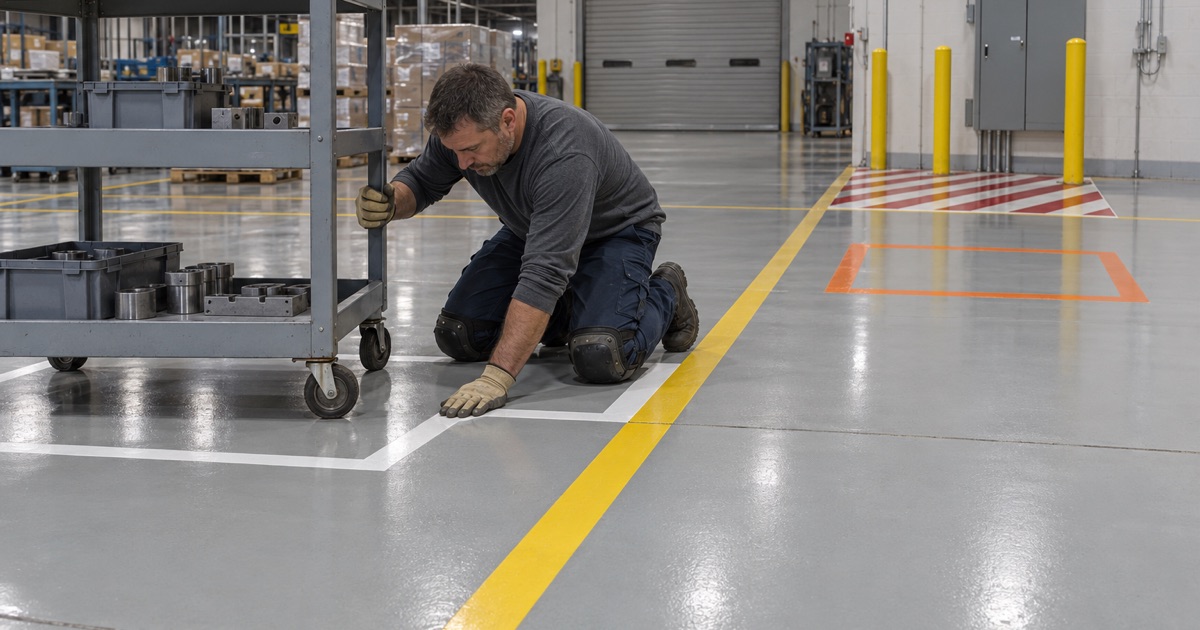
In a converting plant, that might mean a yellow lane for pallet jacks, a white corner for every cart feeding a pouch machine and a separate color for boxed product waiting to ship. The plant chooses the assignments; our job is to lay them the same way from one end of the building to the other.
Orange for Holds, Red for Scrap
Orange marks material or product held for inspection, and red marks defects, scrap, rework and red-tag areas. Those two colors do quality work on the floor. A pallet inside an orange box is not cleared to ship, and a tote inside a red box is not going back to the line. When the boxes wear down to ghost outlines, product drifts across the boundary.
Red and White Keep-Clear Boxes
Red and white striping marks areas kept clear for safety or compliance, such as the floor in front of electrical panels and firefighting equipment. Black and white marks areas kept clear for operational reasons, and black and yellow marks areas with special physical or health hazards. A red-and-white box in front of a panel is the one graphic nobody should have to guess at, so we lay it at full film thickness rather than as a thin painted border. The size of each box comes from the plant and its safety reviewers; we lay out what they specify rather than guessing a dimension.
A Convention, Not a Code
The same article says there are “no government-mandated or widely accepted industry standards” for floor-marking colors, and that OSHA 1910.144 gives no clear floor color guidance. The colors are the plant’s own choice, and floor marking by itself does not make a building compliant with anything. What we can promise is a consistent, durable version of the code the plant has chosen.
Why Tape Lifts and Coated-In Lines Last
Floor tape is quick to lay and easy to move, which is why many plants start with it. The trouble shows up once the wheels arrive.
What Happens to Tape
Under pallet jacks and forklift wheels, tape edges lift. Dirt and scrubber residue collect along the lifted edge, the corner tears, and what was a white cart outline becomes a gray smear nobody reads. Re-taping turns into a standing chore, and in a plant that runs overnight there is little slack in the schedule to do it.
Lines Laid Inside the Coating System
Lines last when they are part of the floor rather than stuck on top of it. We apply the color coat for each line and box over the body coats, then run a clear wear coat across the whole floor, so wheels and scrubber brushes ride on the clear layer instead of on the pigment. That wear coat is usually a polyaspartic, polyurea or urethane topcoat chosen for the traffic and the cleaning chemistry, and the proposal names which one.
Line edges are masked during application for a crisp border, and the masking comes up before the coat cures. Nothing adhesive stays behind on the finished floor to lift and collect dirt.
Where a Line Crosses a Joint
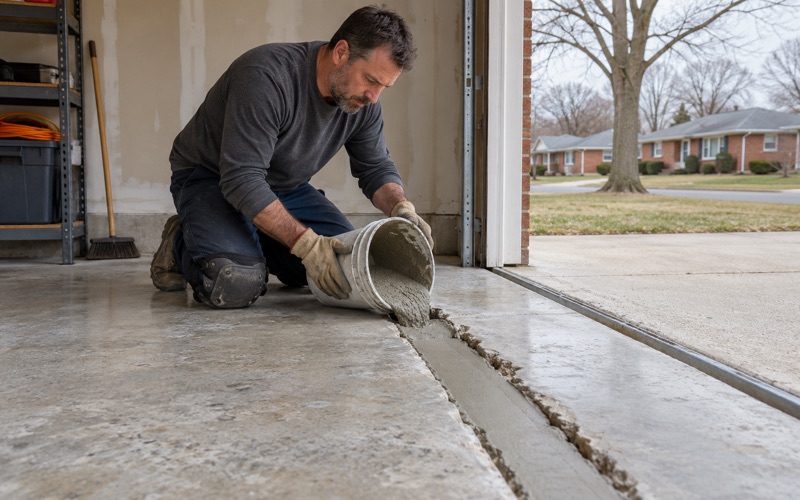
A line that crosses an open saw-cut joint is where coated marking tends to fail first. Small hard wheels drop into the gap and chip the joint edges, and the stripe breaks at every cut. We fill joints flush with a semi-rigid filler before the color coat goes down, so the line runs across the joint without a gap for a wheel to find.
Prep That Makes the Lines Worth Laying
A coated-in line is only as good as the bond under it. We grind or shot blast the slab to the ICRI concrete surface profile the system calls for and check moisture with ASTM F2170 in-situ relative humidity probes or ASTM F1869 calcium chloride tests before committing to a product. Coating over a damp slab, or over old floor paint that is already letting go, is how a new marking program ends up peeling along with the coating under it.
Settle the Layout First, Then Coat
Because the color code belongs to the plant, the layout has to be settled with the operator before the floor is coated, not after. A line in the wrong place costs a grinder pass to remove, and the patch shows.
Walk the Floor With the People Who Run It
We walk the floor with the people who run the lines and mark up a drawing: lane widths, cart homes, hold and scrap boxes, and a keep-clear zone at every panel and extinguisher. If an area is likely to change during an equipment move or a line changeover, it is often better to leave that zone in tape until the layout settles than to coat in a line that will be ground off next year. The marked-up drawing goes into the proposal, listing each color, line width and box, so the finished floor can be checked line by line against what was agreed.
Working Around a Night Shift
A plant that runs nights does not have a quiet shift to give up. Floor work there is phased by area and fitted into weekend or shutdown windows, with each zone closed off, coated and returned before the next one opens. Cure schedules follow slab temperature and the dew point at the surface rather than the calendar, so the return-to-service time we give is one the floor can meet. Where a zone cannot stay closed for a full cure, a faster-curing polyaspartic topcoat can shorten the wait, and the proposal says which areas get it.
Products are chosen inside the Illinois VOC limits for floor and industrial coatings, which bind whoever applies them. That keeps the choice of primer, body coat and topcoat on solid ground before anything is ordered.
Who Signs Off in Northlake
Every contractor and subcontractor working in Northlake must register with the City of Northlake Building Department: a $100 annual license good for one year from issuance, a $10,000 bond and a certificate of insurance naming the city. Fire protection is not a city department here. It belongs to the Northlake Fire Protection District, so a fire-code question about the floor in front of fire equipment goes to the district rather than to City Hall. We settle both before a job goes on the calendar.
- 20+ Years on Concrete
- Moisture Testing in Every Scope
- Ground, Never Acid-Etched