Elmhurst Epoxy Flooring installs metallic epoxy floors in Elmhurst, IL, serving surrounding cities including Northlake, Bellwood, Bensenville, Franklin Park and Westchester. Metallic epoxy turns concrete into a marbled, pearlescent surface with depth and movement that no tile or vinyl can copy, and every floor ends up slightly different from the last. With 20+ years of grinding and coating slabs behind us, we know the finish is only as good as the concrete it is poured over.
A metallic floor is less forgiving than any other coating we install. High spots, low spots, patches, drafts and temperature swings all show in the finished pattern, because the pigments drift and settle according to how the resin levels across the slab. That is why our metallic jobs start with careful grinding, a moisture test and patient repair work, long before any color is mixed.
Our proposals spell out the primer, the metallic body coat, the topcoat, the number of coats and the finished thickness, so you know exactly what you are buying. We also show you real sample boards and talk honestly about where metallic epoxy shines and where a flake or quartz floor would serve you better.
How a Metallic Epoxy Floor Is Built
Flattening and Repairing the Slab
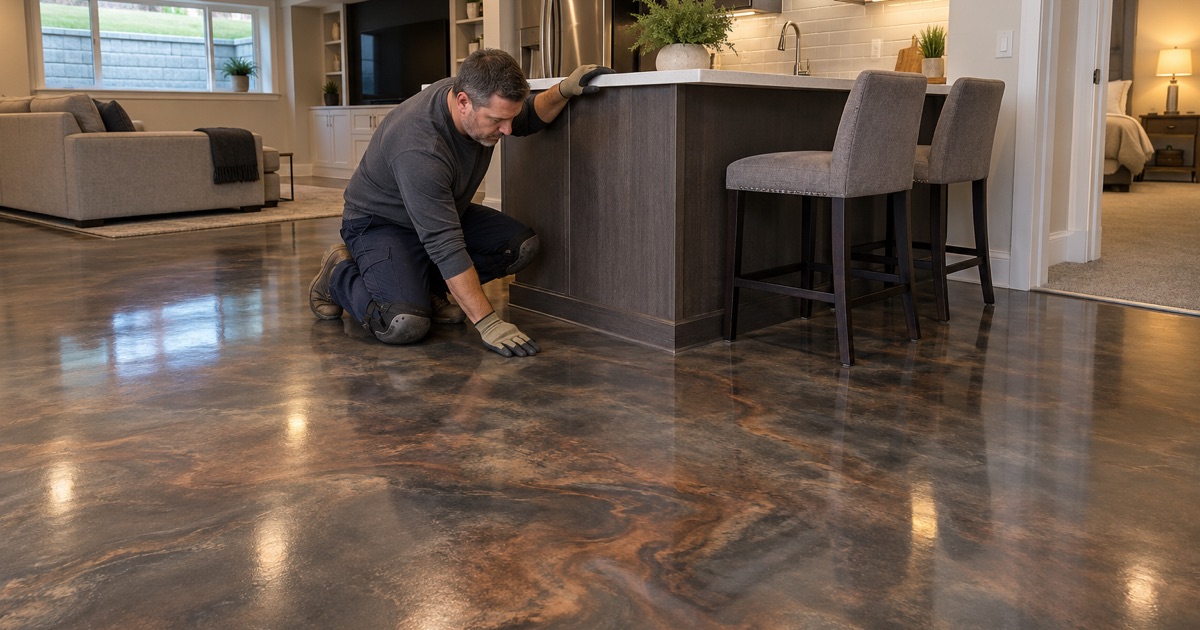
The slab is diamond ground to remove old coatings, curing compounds and weak surface paste, then cracks, spalls and low spots are filled and ground flush. On a metallic floor, a patch that would vanish under flake can telegraph through as a shadow or a change in the flow, so repairs are feathered with extra care. We point out any slab defect we expect to remain visible before work begins.
Flatness matters more than on any other system. Resin pools in low areas and thins over high ones, and the pigment follows it, so a floor with a slight dip can show a darker pond of color there. Grinding and patching are where most of a metallic floor’s quality is actually decided.
Primer and Base Color
A primer seals the slab, controls outgassing from the concrete and gives the metallic layer a uniform background. Its color affects the finished look, because a dark base deepens the tones and a light one brightens them. Where the moisture test shows elevated vapor, a moisture-mitigation primer goes down first, since a metallic floor that blisters cannot be invisibly repaired.
The Metallic Layer
Metallic pigments are mixed into clear 100% solids epoxy and poured onto the primed floor, then worked while wet. Rollers, brushes, solvent spray and deliberate tool movement create veining, cells, cloud effects or a lava-like flow. Timing matters, because the look keeps shifting until the resin begins to set, and the crew must work evenly across the whole floor.
Room conditions are controlled throughout. Doors stay closed against drafts, the temperature is held steady and fans are kept off the wet floor, because moving air and cold spots both leave marks in the pattern that no topcoat can hide.
Protective Topcoat
A clear topcoat protects the metallic layer from scratches and stains and sets the final sheen. Where the floor sees sunlight, a UV-stable polyaspartic or aliphatic urethane topcoat keeps the colors from ambering. For high-traffic areas, a harder topcoat and an optional fine aggregate for grip extend the floor’s life and make it safer when wet.
Residential Metallic Epoxy Floors
Finished Basements and Family Rooms
Basements are where metallic floors often look their best. With little direct sunlight and controlled temperatures, the colors stay true and the reflective surface brightens rooms that bare concrete leaves dim. We still test the slab and read the basement for past water first, because a coating does not stop seepage and a metallic floor shows any blister plainly.
Collector and Show Garages
For a garage that houses a collector car or doubles as an entertaining space, a metallic floor makes a striking backdrop. It needs a hard, UV-stable topcoat and a slab protected from road salt, so we are candid that a daily-driver garage in DuPage County winters will usually be better served by a flake system that hides wear.
Kitchens, Bars and Lower-Level Entertaining Spaces
In walk-out lower levels and home bars, metallic epoxy gives a seamless, easy-to-clean floor with real visual impact. Spills wipe up from the sealed surface, and the floor can be designed around cabinetry, islands or built-ins. We coordinate with other trades so the floor goes down at the right point in the sequence.
Commercial Metallic Epoxy Floors
Showrooms and Retail Spaces
Metallic floors are popular in showrooms, salons and boutiques because they look custom and photograph well. We schedule the work outside business hours, protect fixtures and walls and plan the pour so the pattern flows naturally around displays. Entry zones get a textured topcoat where wet boots arrive in winter.
Offices, Lobbies and Restaurants
In offices and restaurant dining rooms, a metallic floor provides a distinctive look with low maintenance. Topcoat selection depends on traffic and cleaning chemicals, and phasing lets a business stay open while sections are installed and cured. Odor and air handling are planned with the building, especially in occupied multi-tenant spaces.
Choosing Colors and Effects
Color Combinations and Sample Boards
Most metallic floors use a base color and one or two accent colors, from soft silver and pewter to copper, charcoal or deep blue. We make sample boards with the actual products so you can see how they look under your room’s lighting, rather than choosing from a screen. Lighting changes metallic colors more than solid ones.
Matching the Floor to the Room
A dramatic, high-contrast pattern can overpower a small room, while a subtle, low-contrast one can look flat in a large open space. We talk through scale, furniture placement and how the floor will be used, and suggest the effect that suits the room. The goal is a floor that still looks right years from now.
We also think about what the floor has to hide. A light silver pattern shows dust and pet hair readily, while a mid-tone blend of charcoal and bronze forgives everyday dirt between cleanings. Being honest about that trade-off at the sample stage saves you from a beautiful floor that looks dirty an hour after it is mopped.
When Metallic Epoxy Is the Wrong Choice
Damp Slabs and Water-Prone Basements
A basement that takes water through cracks or the floor joint, or a slab whose moisture readings are far above the product’s limits, is a poor candidate for a metallic finish. Any blister or delamination shows as a visible scar in the pattern, and a spot repair rarely blends. In those cases we recommend solving the water first, or choosing a broadcast system whose texture hides small repairs.
Our moisture test and walk-through answer this before you fall in love with a sample board. If the numbers point to a mitigation primer, we include it in the proposal and explain why; if they point to a water problem, we say so and wait.
Heavy-Wear Floors and Cold Garages
Forklift aisles, machine shops and unheated garages that see salt, studded tires or temperature swings are better served by thicker, textured systems. A metallic floor can survive there with the right topcoat, but scratches, scuffs and salt haze stand out against its smooth, reflective surface far more than they do on flake or quartz.
Cold also affects the pour itself. The metallic layer needs a stable, warm slab to level and cure evenly, so an unheated space in winter is scheduled for a warmer window rather than poured into conditions that will show in the pattern for the life of the floor.
- 20+ Years on Concrete
- Moisture Testing in Every Scope
- Ground, Never Acid-Etched