Elmhurst Epoxy Flooring brings more than 20 years in the trade to epoxy flooring in Evergreen Park, and on an older basement or garage the first question we ask is about the paint, not the grinder. A floor that has been in service for decades has often been painted at least once, and paint applied before 1978 can contain lead. That single unknown decides how the old coating comes off, who may take it off, and what the cleanup has to prove.
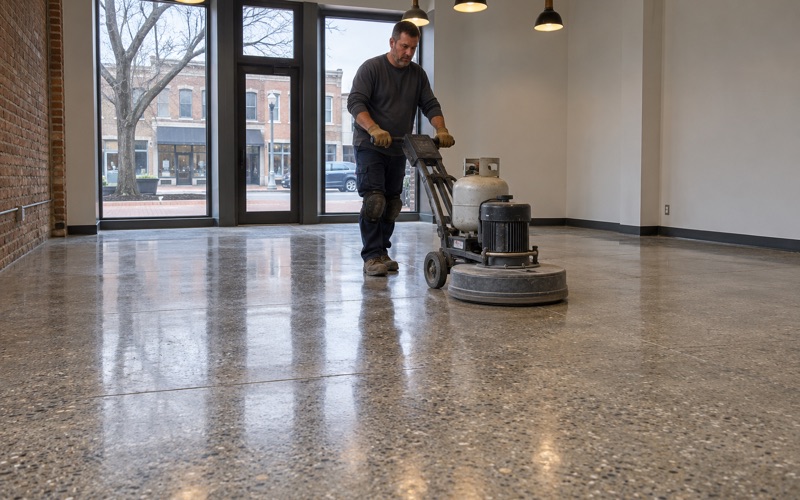
So a lead test comes before any profile work. We still open every slab mechanically, with a diamond grinder or a shot blaster rather than an acid etch, because a coating needs a real profile to grip. On a painted floor in older housing, though, grinding is exactly the step a federal rule watches, and the test result sets the method before a machine is switched on.
This page explains what that means for a homeowner here: when grinding turns into regulated renovation, what EPA changed about floor dust in 2024, how testing shapes the plan, and why garages and workshops used by children deserve the same care. A coating is not a fix for lead paint, and we will never describe one that way.
Old Paint on Old Slabs, and When Grinding Becomes Renovation
A village of 1940s and 1950s houses
Evergreen Park is a village in Cook County, bordered by Chicago on the north, east and south and by Oak Lawn on the west. Its housing is overwhelmingly mid-century: 58.8 percent of units date from 1940 to 1959, and 86.7 percent were built before 1970. With 95.8 percent of owners living in a detached house, most of the slabs we are asked about sit in a basement or garage that has been in use since the 1940s or 1950s.
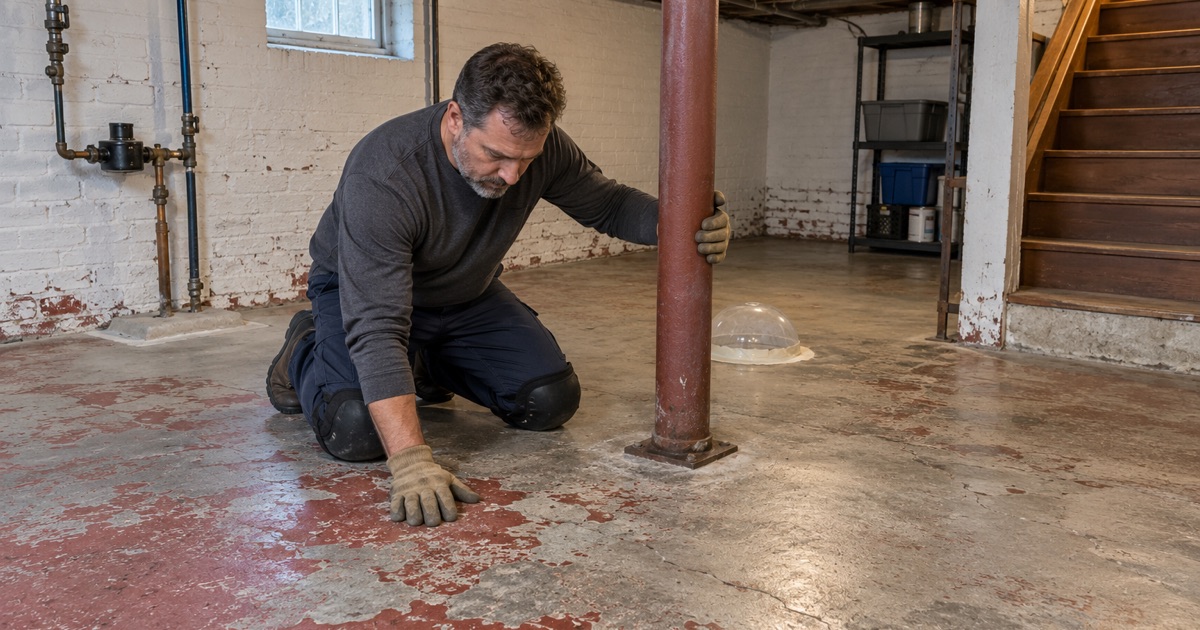
Floors that old rarely reach us bare. Over the decades they collect floor paint, patches, sealers and sometimes a second or third coat over the first, and no record says what went down when. Nobody tested a floor in this village for this page, and we would never guess either way about yours; the answer is unknown until it is tested.
What the federal rule counts as renovation
The EPA Renovation, Repair and Painting rule, in 40 CFR 745.83, defines renovation as modifying an existing structure in a way that disturbs painted surfaces. It names surface preparation such as sanding, scraping or other work that may generate paint dust. Grinding or shot blasting a painted floor fits that description squarely.
Where the 6 square foot line falls
The rule sets aside minor repair and maintenance, meaning interior work that disturbs 6 square feet or less of painted surface per room without using the practices the rule restricts. A one-car garage or a basement family room is many times larger than that, so taking the paint off a whole floor in pre-1978 housing is renovation, not maintenance. Once it is renovation, the work calls for a firm certified under the rule, containment, a HEPA-shrouded grinder instead of open grinding, cleanup and a cleaning verification at the end.
That is not a scope we bury inside a coating quote. If a painted floor tests positive or has to be presumed lead paint, we say so before anything is priced, and the removal is planned as regulated work rather than ordinary surface prep.
Looking for epoxy-flooring closer to Winnetka? See Epoxy-Flooring Services in Winnetka.
What EPA Changed for Floor Dust in 2024
In October 2024, EPA revised its lead dust standards under sections 402 and 403 of the Toxic Substances Control Act. The old dust-lead hazard standards for floors and window sills were 10 and 100 micrograms per square foot. The revision replaced both numbers with any reportable level, as analyzed by a laboratory recognized under EPA’s National Lead Laboratory Accreditation Program.
What any reportable level means on a floor
Under the old standard, a small amount of lead in floor dust could sit below the hazard line. Under the new one, if an accredited lab can report it, it counts as a hazard. For anyone thinking about grinding an old painted basement floor, that removes the comfortable idea that a little dust left behind is still within limits.
The revision also tightened how cleanup is judged. The post-abatement dust-lead level for floors dropped from 10 to 5 micrograms per square foot, with window sills moving from 100 to 40 and window troughs from 400 to 100.
Who the standards cover
The revised standards apply to pre-1978 homes and childcare facilities. In Evergreen Park that describes most of the housing stock, since only a small share of units here were built after 1970. A house where young children play on the basement floor is exactly where floor dust matters most.
Why the grinder is the moment that matters
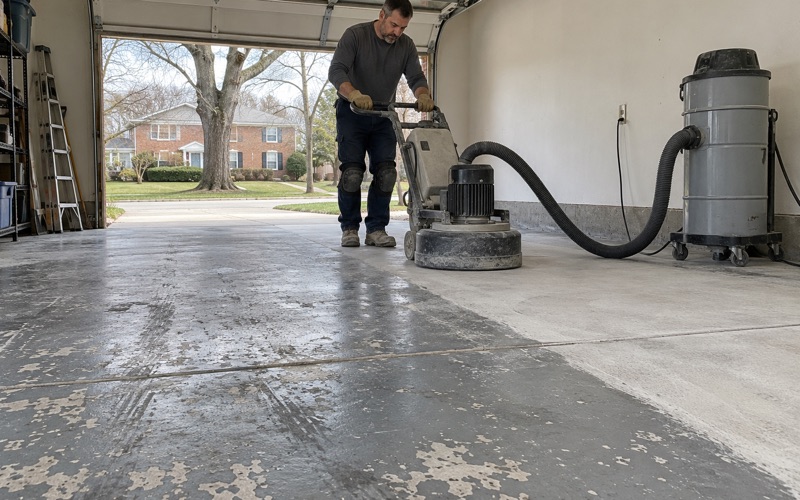
Paint that is intact on a floor is not airborne, but grinding turns it into fine dust spread across a room. An open grinder throws that dust into the air and onto every shelf, ledge and stair tread nearby. That is why the regulated method relies on a shroud at the cutting head, a HEPA vacuum connected to the shroud, and a cleaning verification after the floor is bare.
Testing First, Then Choosing the Removal Method
Our sequence on an older painted floor follows a fixed order. We map the existing coatings, cracks and spalls first, test the paint for lead, and only then write a scope that says how the floor will be opened. A moisture test still belongs in that written scope before the price is final, because a lead-free floor over a damp slab is a different problem, not a solved one.
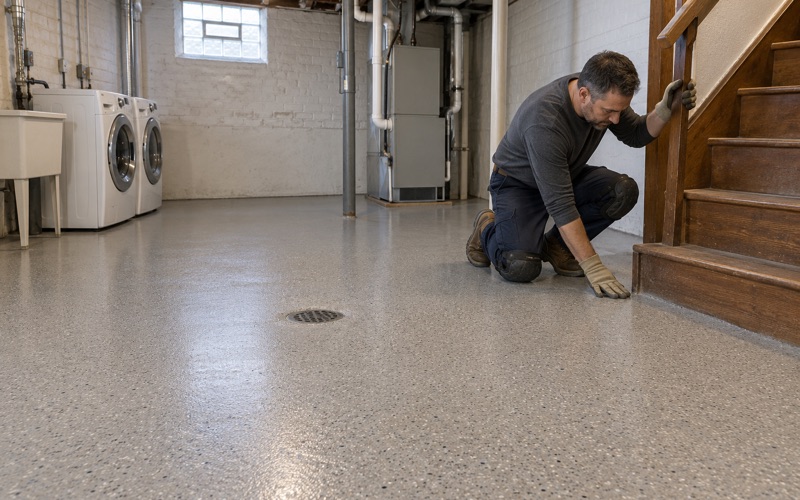
Basement floors are also read for past water before anything else is decided. A coating does not stop seepage or hydrostatic pressure pushing up from under the slab, and we name moisture first among the warranty exclusions before a job is sold.
When the paint tests negative
A negative result on the coats that will be disturbed puts the floor back on our normal path. We grind or shot blast to the ICRI concrete surface profile the product’s data sheet calls for, with the dust pulled into a vacuum at the machine rather than rinsed toward a floor drain or a sump pit. The proposal then names the product line, the number of coats and the finished thickness, so you can check the finished floor against the paper.
When it tests positive or is presumed lead paint
A positive result, or a choice to presume lead rather than test, makes the paint removal renovation work under the rule. That brings in the full regulated method described above, from containment through the cleaning verification, before the room reopens. We tell you plainly when that part of the job has to go to a firm holding that certification, and we schedule the coating only after the floor has been cleared.
What a coating cannot do
A new epoxy floor over old lead paint is not lead abatement, and it does not make that paint safe to disturb later, whether by a grinder next month or by the next owner’s renovation. Covering the problem only moves it to whoever opens the floor next. That is why the test decides the method, and the coating decision waits on the result.
Garage Floors, Workshops and Children at Home
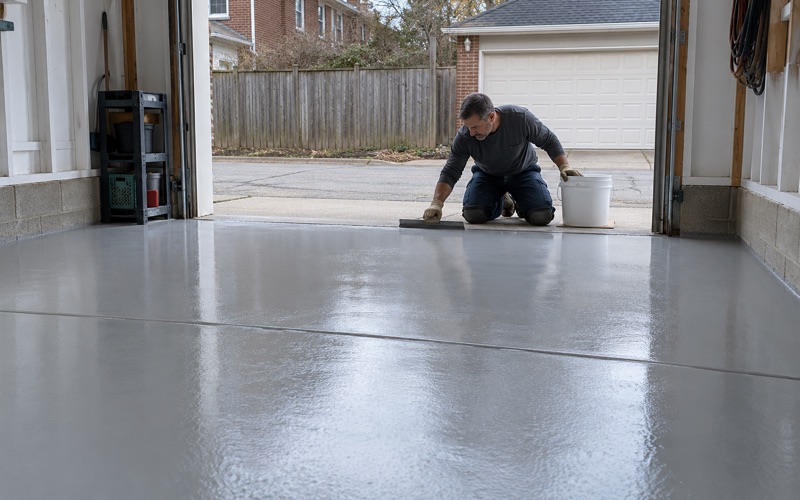
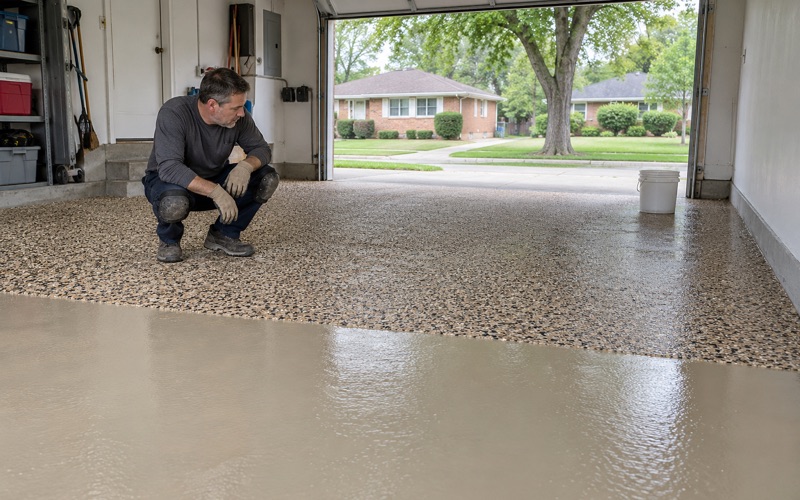
Garages here carry their own history. A garage built alongside a 1950s house may have had its floor painted for a workshop, a hobby bench or simply to hide oil stains, and the same rules apply to that paint as to a basement’s. The size of a typical garage floor puts any full removal well past the 6 square foot line.
Workshop and hobby floors
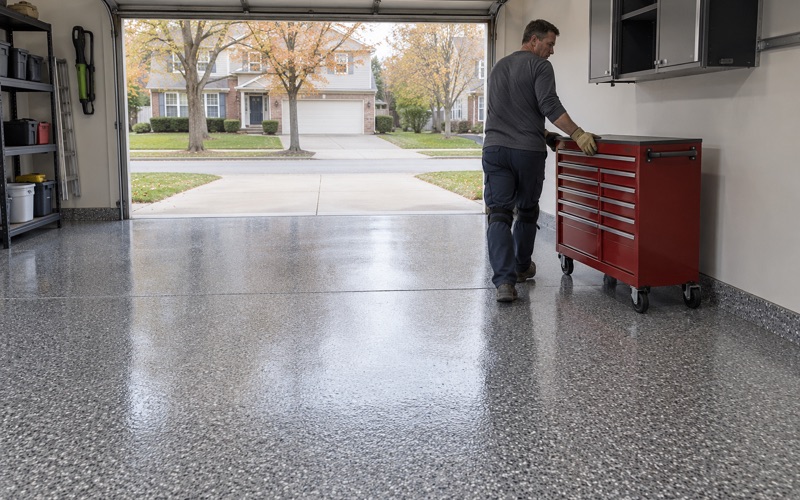
A painted workshop floor usually carries more than paint: oil, solvent spills and old patches, all mapped alongside the cracks before we quote. Those areas take extra grinding to reach sound concrete, which is where testing first earns its keep. On a floor that tests clean, we pick a garage system built to hold up to the brine and rock salt that ride in on tires all winter, such as a 100% solids epoxy base under a polyaspartic topcoat.
Slip resistance on that floor comes from the broadcast and topcoat we specify, not from a promise. A vinyl flake or quartz aggregate broadcast, sealed under the right topcoat, sets the texture you will actually stand on in wet boots.
Children and the cleanup standard
Young children spend their time close to the floor, and floor dust is what the 2024 standard targets. If kids use the basement or garage, we plan the work so the space stays closed until cleanup is done and, on any job involving lead paint, until the cleaning verification is complete. The schedule we hand you shows when that area can be used again.
Cold months, permits and paperwork
An unheated garage in deep winter is told to wait, because we time cure by slab temperature and dew point rather than by the calendar. The Evergreen Park Building Department on South Kedzie Avenue requires a contractor license to be issued and numbered before any permit, and it requires permits for any alteration, repair or remodel, so we confirm with the village what a given floor job needs before it is scheduled. Home jobs over the state threshold also get a written contract and the Illinois consumer-rights pamphlet before any grinding starts.
We pick products inside the Illinois VOC limits for floor coatings, which bind whoever applies them. Between that, the lead test and the moisture test, the paperwork on an older floor here is longer than on a new slab, and every line of it exists because of what might be under the old paint.
- 20+ Years on Concrete
- Moisture Testing in Every Scope
- Ground, Never Acid-Etched